01
UNDERSTAND
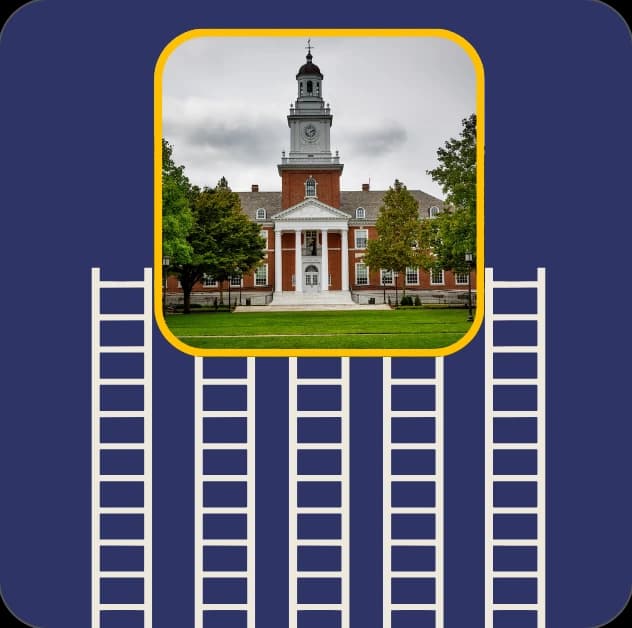
Who is this student? What are their interests, habits, strengths, patterns of attention, and common traps?


Projects, research, leadership, and academic depth that top global universities can trust.
Choose your stage
Most families wait too long. Grade 6, 7, or 8 is when genuine interests can be explored without pressure — when a student can try things because they're curious, not because it looks good on an application.
That's exactly the kind of depth the world's best universities are looking for.

Students and parents default to emphasising the quantifiable: individual achievement in academics, athletics and extracurricular activities…Meanwhile, colleges are actually looking for something else — authentic intellectual engagement, a concern for others and the common good.
Jeremiah Quinlan
Dean of Undergraduate Admissions, Yale University
Yale Daily News · Turning the Tide report launch, 2016
The programme structure
01
Who is this student? What are their interests, habits, strengths, patterns of attention, and common traps?
02
Age-appropriate commitments — "I want to explore this for six weeks." "I want to become more consistent."
03
Mini projects turned into showable outputs. Real work, finishable and meaningful. A decision log documenting choices and outcomes.
04
What happened? What changed? A repeatable decision-making process: understand the context, decide, act, review.
BY END OF 12 MONTHS
2–3 completed mini projects
Real, finishable work with showable outputs — not participation certificates.
BY END OF 12 MONTHS
At least one showable output
A report, prototype, blog, video, or presentation they can explain and share.
OVER TIME
Clearer interests
They stop saying "I'm interested in everything" and start saying "I want to go deeper in this."
OVER TIME
Stronger follow-through
Better planning habits, greater ownership, ability to work independently.
Is this right for your middle-schooler?

No. At this stage the goal isn't university at all — it's curiosity, habits, and follow-through. Students who build those early arrive at Grade 11 with real interests and the discipline to act on them, rather than scrambling to invent a profile.
A set agenda agreed beforehand, a review of what was done since the last session, and a clear decision on what comes next. Each session ends with a short written summary, so parents and students both know what was agreed.
That's normal, and it's where most students start. We use short, low-stakes projects to test different areas. Interest usually follows engagement, not the other way round.
Tutoring improves performance in a subject. We help a student decide what to pursue, why it matters, and how to build real depth in it over time. Grades are the foundation; we work on everything built on top of them.
One named mentor who stays with your child throughout, supported by specialists for essays, testing, or subject-specific work. Every mentor has been through selective admissions personally, and the founders review key work directly.
Grade 9 and 10 are where the angular profile gets built — not assembled at the last minute. This is when a student can go genuinely deep in one or two things, reach meaningful levels of achievement, and create the kind of trajectory that admissions officers can read clearly. The students who get into the world's best universities started building here.

The students who arrive at Grade 12 with the strongest applications didn't build them in Grade 12. They built them in Grade 9 and 10 — through choices, projects, and sustained commitment that no last-minute preparation can replicate.
Abhishek Singhal
Co-founder & Head Mentor, UaH
MIT Sloan | Harvard Law School | IIT Delhi
The programme structure
01
Who is this student? What are their interests, strengths, working style — and where does the profile need to grow?
02
APs, SAT windows, summer programmes, competitions — sequenced over two years to build depth without overload.
03
Profile building starts. First real projects are launched — aligned to genuine interests and the thresholds a strong application will need.
04
Existing projects are taken higher. By Grade 10, students have identified their capstone — the single project that will define their application.
Not at all. Grade 9 is when choices start compounding — subject selection, sustained activities, and early projects. Starting now means the work can grow at a sensible pace instead of being compressed into Grade 11.
Doing well in school shows capability. Profile building shows direction: sustained work outside the classroom that reveals what a student cares about and what they do with that interest. Universities look for both.
Not yet. What matters is that they're exploring actively and finishing what they start. A clear direction tends to emerge from that work by Grade 11, and it's far more convincing when it does.
We look for three things: genuine interest, room to go deep over time, and a tangible outcome. Fewer activities pursued seriously beat a long list pursued lightly.
No. Grade 10 still leaves two full years to build depth. The work becomes more focused, but there's ample time to develop a coherent profile if you start deliberately.
It depends on the direction the student is leaning toward and what their school offers. The principle is to choose rigour in the areas that support their likely field, without overloading. We plan this with you subject by subject.
Usually in Grade 10 or early Grade 11, with a diagnostic test first. The right timing depends on the student's maths and reading level and how their school calendar falls.
Both. Many families apply to both, and we plan the profile so it works for each. The UK application is narrower and subject-focused; the US one is broader. We help you decide where to put the weight.
If you have a strong foundation, Grade 11 and 12 is where it becomes an application. Your projects reach their conclusion. The narrative has to be found, the essays have to be written — and rewritten, and rewritten again — and the school list has to be honest, not aspirational. This is the most intensive stage. It's also where the work becomes most visible.

An exceptional depth of experience in one or two activities may demonstrate your passion more than minimal participation in five or six clubs.
Stanford University
Official Undergraduate Admission
admission.stanford.edu/apply/overview
The programme structure
01
Shift from exploration to execution. Specific projects suited to every dimension of the student's profile — their data, voice, and demonstrated talent — across the factors universities actually evaluate.
02
Existing projects taken to completion. Decision-support intensifies — the frequency of admissions-impacting choices increases significantly during this period.
03
A data-driven school selection process. Essays, CV, activities — every element of the application told as one coherent, narrative-driven story. Work continues through Early & Regular decision cycles.
As early in Grade 11 as possible. The first months go on direction, testing plans, and the school list, so the summer before Grade 12 can be spent on essays rather than catch-up.
They still matter at most selective universities, even where testing is optional. Most students sit them in Grade 11, leaving a retake window before applications open.
Quite a lot, if the time is used well. We identify one area to deepen, build a focused project or piece of work around it, and make sure the application tells a coherent story about it.
Around the student's actual profile, not rankings alone. A balanced list is usually eight to twelve schools across reach, match, and likely, each with a clear reason for being there.
It depends on how clearly one school stands out and whether the family can commit if admitted. We look at fit, the student's profile, and finances before recommending anything.
As many as it takes. Most main essays go through several rounds, each with specific feedback, and the words always remain the student's own.
We help choose recommenders who know the student well, not only the most senior teachers, and prepare a short brief so each letter supports the case the application is making.
Yes. Universities see final grades, and a sharp decline can put an offer at risk. Final-year results also matter for any deferral or waitlist response.
You're in Grade 12. Deadlines are real and close. This isn't the time for a full profile rebuild — it's the time to take what you have, find the strongest possible narrative, and execute an application with precision.
The earlier we start within Grade 12, the better the outcome. If you're reading this in July or August, reach out immediately. If it's November, we'll tell you honestly what's still possible.

A transcript is the heart of any candidacy. It's the way we understand academic achievement and potential. It certifies your preparation and helps us imagine how you'll perform in our classrooms.
But here's another important part of our review. As we shape a class, we're looking for curious people. We're looking for lively conversationalists. We're looking for people who have ideas and enjoy batting those ideas around.
Lee Coffin
Dean of Admissions, Dartmouth College
Admissions Beat Podcast, Season 2 Episode 9 — "Decoding Transcripts"
The programme structure
01
Everything reviewed — academics, activities, test scores, existing work. What's usable, what can be strengthened, what is the strongest narrative right now.
02
Built around the actual profile, not wishful thinking. Reach, match, and likely schools chosen to maximise a strong outcome.
03
Every essay, supplement, CV, and activity tells one coherent story. Multiple rounds, reviewed directly by our founders every time.
04
Every deadline tracked. Every requirement managed. Interviews prepared for. Deferral and waitlist strategy until a final decision is reached.
June – August
START NOW
The most time to work with. Full essay development, complete school list, strong narrative built from the ground up.
September – October
STILL POSSIBLE
ED and EA deadlines approaching. Intensive engagement needed immediately. Focused, fast, and disciplined.
November – December
LIMITED SCOPE
UCs and RD deadlines still achievable. We'll be honest about what is possible at this stage.
January onwards
BOOK A CALL FIRST
Some applications may still be open. Talk to us before assuming it's too late.
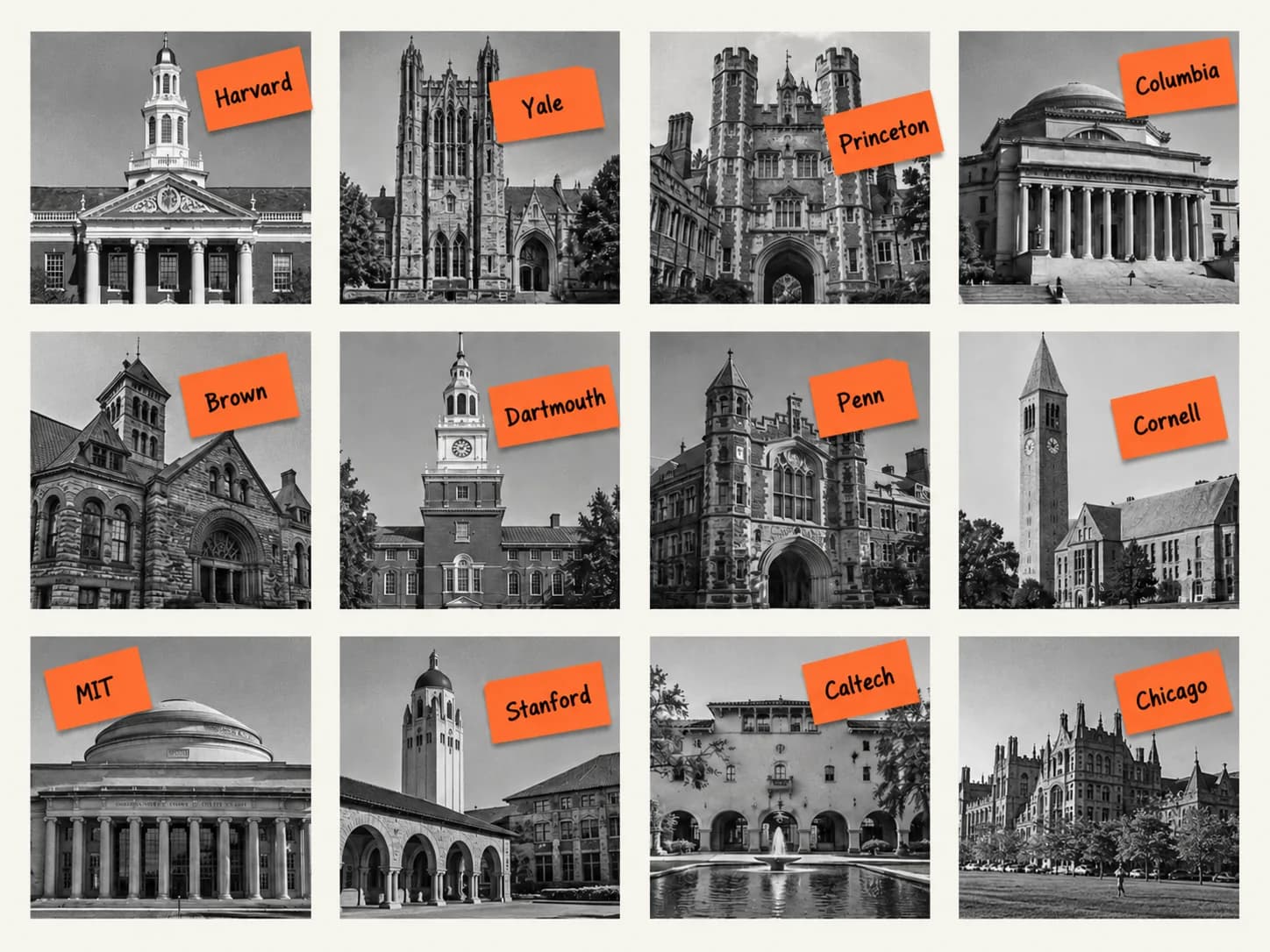
No single exam decides your fate at a US college. They read your whole story — grades, essays, activities, who you are on the page — to decide if you belong. That’s an opportunity: a student who isn’t the top ranker can still stand out. And a trap: without a strategy, a strong applicant vanishes into thousands who look identical on paper. We help you tell your story so a top US college can’t overlook it.
It is my hope that students will not do things because they think they have to only to serve the college admissions process, but that they will feel empowered to explore and pursue the things that interest them, to make those around them better, and to have fun.
Stu Schmill
Dean of Admissions and Student Financial Services, MIT
MIT Admissions blog — “Turning the Tide”, June 2016
Do you know?
Start from selecting 10-12 universities or more and understanding their preferred application methods. Many universities accept the Common Application, while others require direct regular decision applications. UCs have a separate application known as the UC application that needs to be completed.
Essays play a significant role and takes a lot of time, and you may find yourself writing around 15-20 essays, including common app essay, personal essay and supplemental essays specific to schools. It is not one SOP which often students get confused with. Again, focus on reflective writing that unravels an aspect of your personality. You need LOR’s also in submitting your application.
Extracurricular activities hold great value for US universities. Choose activities as per your interest that ignite your passion as well. Particularly focus on activities where you have spent significant time.
Applying early can offer advantages. It enhances your chances of acceptance to many top schools. However, some early application commitments are binding.
Excellent grades and competitive SAT/ACT scores remain crucial aspects of your application. For CBSE and ISC students giving APs make sense.
If you receive an acceptance, you have secured your place at the university! Unless there is a significant fall in grades, you would not have to worry.
Two teacher recommendations (aligned with your subjects), one counsellor report, optional others.
Most US university applications provide an option to indicate that you are “undecided.”
The US application process can be complex, with different application platforms, university-specific essays and requirements, varying deadlines, and important decisions to navigate at every stage.
The application, step by step
01
Most universities accept applications through the Common Application; some use their own systems. Create accounts early and enter your academic and personal information carefully.
02
After shortlisting, add up to 20 colleges to your Common App. Describe each activity by what you actually did, your contribution, and the impact or learning.
03
Prepare the personal statement and any university-specific supplemental essays, and invite the teachers and counsellor who will write your recommendations.
04
Choose the right round for each school: Early Decision, Early Action, Restrictive or Single-Choice Early Action, or Regular Decision.
05
International students should research each university’s financial-aid policy separately — they differ widely, and deadlines often come earlier than the application.
Beyond the classroom
Pillar 01
The challenge
Selective US universities read activities for evidence of initiative, not attendance. Most students have interests but no way of turning them into sustained work with a result someone else can see — so the activities list ends up reading as participation.
How we help
Find the question
Start from what the student is genuinely curious about, and narrow it to a project or research question they can actually finish.
Scope it honestly
A plan sized to the student’s school calendar, with milestones and a clear end product — a report, prototype, dataset, or paper.
Build with a mentor
Regular guidance on method, writing, and next steps from mentors who have done this kind of work themselves.
Place it in the application
Make sure the work is described precisely in the activities list, essays, and recommendations, so it reads as one story.
Student work

Admitted to Kelley School of Business
Chandigarh, India
Project on Indian Stock Market
Analyzed the impact of Indian elections on stock markets (2014–2024). Published in IOSR Journal of Economics and Finance.

Admitted to Purdue University
Mumbai, India
Project on Humanoid Bot
Built a disaster rescue bot to detect people trapped under rubble; won 2nd place nationally at IIT Hyderabad.

Admitted to Kelly School of Business
Delhi, India
Competition & Community Initiative
SlingShot Challenge and Community initiative on Yamuna cleaning, research project on IPL valuation and media rights.

Admitted to Wisconsin Madison
Doha, Qatar
Project on Statistical Analysis
Conducted a statistical analysis of factors influencing penalty-kick success in the Premier League.

Admitted to University of Southern California
Delhi, India
Initiatives & Research
Started a psychology club, advocated for body positivity and anti-bully. Research on Teenager’s Impulse Consumption Habit
Pillar 02
The challenge
Recognition from outside the school is one of the few signals an admissions reader can compare across countries. But students often enter whatever is nearest, spread thin across too many, and never reach the level where a result means something.
How we help
Choose the right few
Competitions matched to the student’s direction and level, rather than a long list entered for the sake of it.
Plan the calendar
Deadlines and preparation mapped across the school year, so entries do not collide with exams.
Prepare properly
Structured practice and feedback on submissions, with time to revise before the deadline.
Connect it to the story
Results framed so they support the student’s wider profile rather than sitting as a separate line.
Student results

Competitions
Selected as a finalist in the International Economics Olympiad, a prestigious global competition that challenges students in economics, financial literacy and business case analysis.

Competitive Summer Program
Participated in Stanford University's SUMaC (Stanford University Mathematics Camp), a selective summer program on advanced mathematical concepts and problem-solving.

Selective Summer Program
Selected for Yale Young Global Scholars (YYGS), a highly selective academic summer program at Yale University.

Dance Achievements
Completed her Arangetram in Bharatanatyam, a significant milestone in classical Indian dance that marks years of rigorous training and culminates in a formal solo stage debut.
A school list should be based on the student’s academic profile, interests, preferred courses, budget and university fit. Typically, students apply to 10–15 US universities, with a balanced mix of reach, target and likely schools.
It depends on the student’s profile, test scores and application strategy. ED is binding; EA is generally non-binding, so the choice should be made carefully.
SAT/ACT importance varies by university, but top universities give it real weight. Students should ideally take their first test by Grade 11 and retake it if needed.
Yes, but set realistic expectations. With limited time in Grade 12, focus on strengthening existing interests rather than trying to build an impressive profile from scratch. Talk to us before assuming.
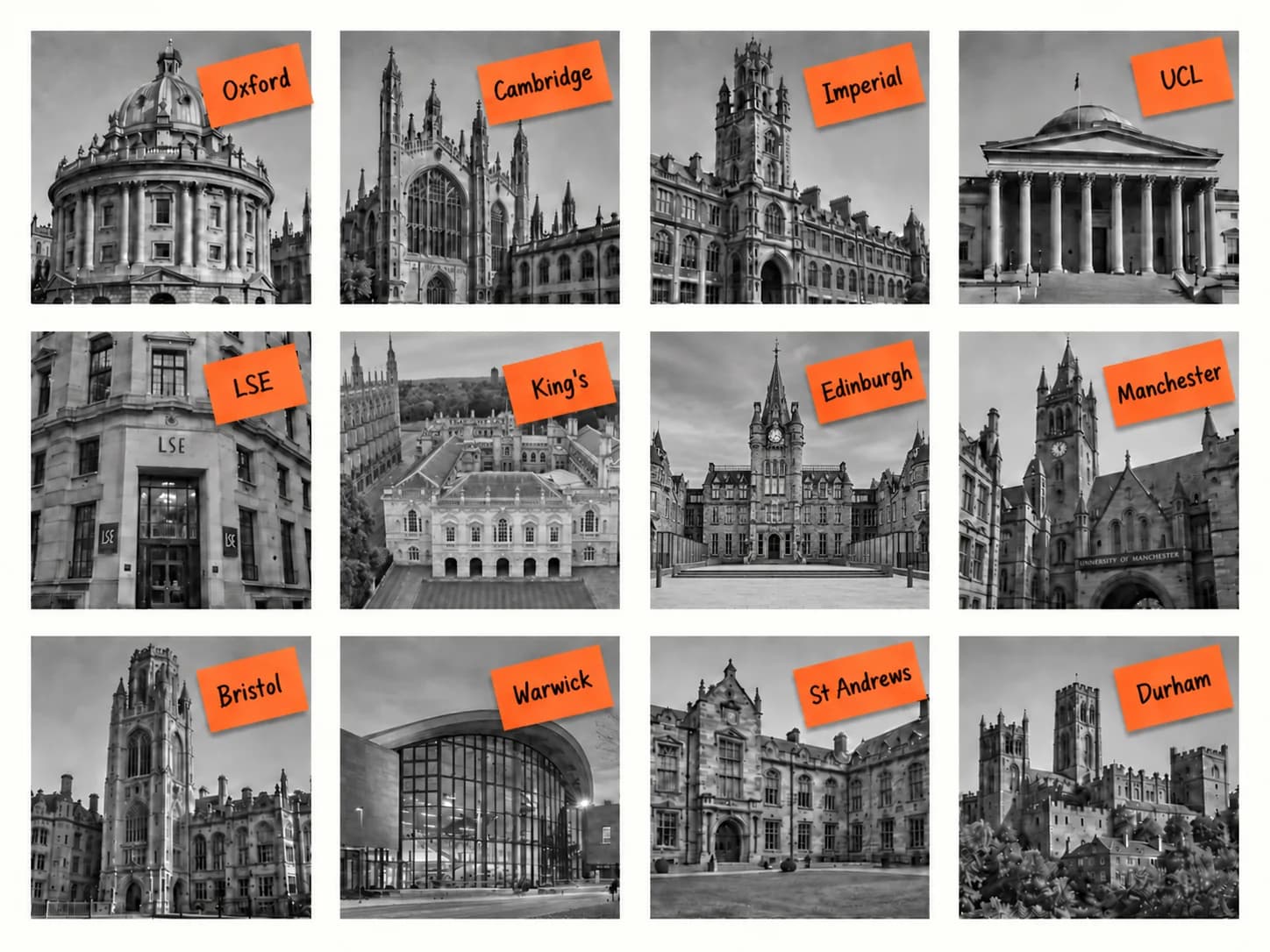
UK universities read your commitment to one subject. You apply for a course, not a campus, and admissions tutors want proof you will thrive studying it: strong predicted grades, reading beyond the syllabus, and a personal statement that argues for the subject. That’s an opportunity: depth beats breadth, so a focused student can compete with anyone. And a trap: miss the October deadline or the admissions test, and the door closes before anyone reads a word. We help you build the case for your course — and get every date right.
Each part of the application is important, but we are most interested in your academic ability, as shown in your most recent and relevant performance.
University of Cambridge
Undergraduate Admissions
“How we make a decision on your application”
Do you know?
You apply to a course, not a university. Pick the subject, then up to five universities that offer it through UCAS. You can apply to Oxford or Cambridge, but not both in the same year.
A single personal statement goes to all five choices, so it has to be about the subject rather than any one university. It is written in response to three set questions.
UK tutors care most about what you have done within your subject — reading, lectures, online courses, and competitions — rather than general extracurriculars.
Oxford and Cambridge applications close in mid-October, while most other UK university courses close in late January. Oxbridge applicants need to prepare earlier.
Offers are usually made on predicted grades. For CBSE and ISC students, universities set subject-specific grade requirements for each course.
Unlike the US, most UK offers depend on your final exam results. Meet the conditions and your place is confirmed.
Courses such as law and mathematics, and many Oxford and Cambridge subjects, require an admissions test. Oxford and Cambridge interview shortlisted applicants, usually in December.
A single UCAS fee covers all your choices, whether you apply to one university or five.
The UK application runs through a single UCAS form, but the details vary by course — which is why choosing the course comes first. We also help students apply to top universities in the US, Singapore, Europe and Canada.
The application, step by step
01
The course decides everything else: required subjects, predicted grades, and whether there is an admissions test.
02
Register on UCAS and add up to five choices. Only one of them can be Oxford or Cambridge.
03
Write one personal statement for all five choices. Your school adds a reference and your predicted grades.
04
Register for any required test early, and prepare for interviews where the course uses them.
05
Choose a firm and an insurance offer, then confirm your place when final results arrive.
Beyond the classroom
Pillar 01
The challenge
UK tutors want evidence that a student has gone beyond the syllabus in the subject they are applying for. Most students list general activities — sports, clubs, volunteering — that say little about how they think about their course.
How we help
Map the subject
Identify the reading, lectures and questions that sit just beyond the school syllabus in the student’s chosen course.
Build a reading trail
A focused list of books, papers and courses, with notes the student can draw on in the personal statement and at interview.
Take one idea further
An extended project, essay competition or independent investigation that shows how the student thinks.
Write it into the statement
Make sure the personal statement argues for the subject, using that work as its evidence.
Student work

Admitted to University of Manchester
Inclusivity & Anti-Bullying Initiative
As School Cultural Secretary, led a school-wide inclusivity and anti-bullying initiative addressing body shaming and LGBTQ+ awareness through classroom discussions, poster exhibitions, overcoming institutional resistance.

Admitted to University College London
Research Project
Three-year Miyawaki Forest project, Effect of temperature and humidity on bacterial flora of human skin, published paper on biopolymers, gene expression, and ocean-acidification reduction methods in JESTI.

Admitted to Imperial College London
Research Project
Used satellite imagery and machine learning techniques to identify and map wastewater treatment plants, analyse their distribution, and estimate associated emissions to better understand their environmental impact.
Pillar 02
The challenge
Many competitive courses shortlist on admissions tests before they read an application closely, and Oxford and Cambridge interview almost everyone they seriously consider. Students often prepare late, or practise reciting answers instead of thinking out loud.
How we help
Know the requirements
Confirm which tests each course needs, and register well before the deadlines.
Prepare in stages
Structured practice on past papers, building speed and accuracy long before the test date.
Practise thinking aloud
Mock interviews on unfamiliar problems, so the student learns to reason through them rather than recite.
Review and refine
Feedback after every mock, so each session builds on the last.
Up to five through UCAS, usually for the same or closely related courses. Only one of them can be Oxford or Cambridge.
Mid-October for Oxford, Cambridge, and most medicine, dentistry and veterinary courses; late January for most other courses. Applying well before the deadline is always better.
Yes, and many students do. The two applications are very different — the UK is subject-focused, the US is broader — so we plan the profile to work for both.
It depends on the course. We check each choice’s requirements early so registration deadlines are not missed.

UAH’s founders will tell you honestly what you need — even if the answer isn’t us.
A free 30-minute diagnostic call. No commitment.
Ready to get started?
Book a callWe use cookies
Some keep the site working. Others tell us which resources families actually read. You can accept everything, decline the optional ones, or choose for yourself — declining will not affect your access to any part of this site.